Generate summary with AI

As an IT admin, one of your core responsibilities is to keep drivers up-to-date and effective. Outdated drivers pose multiple risks, such as:
- Reduced hardware performance
- Increased security vulnerabilities
- Destabilized systems
When drivers aren’t up-to-date, a system’s entire reliability is compromised.
Manually updating drivers is time-consuming and complex, but a better alternative exists. The best driver updater software automatically (or even autonomously) identifies and installs the latest drivers, drastically reducing the risk of errors and saving time.
To help you make the best choice for your IT department, this article looks at the best driver updater software on the market. You’ll gain comprehensive insight into each option, as well as background information on the fundamentals of driver updater software and the importance of investing in a solution. Let’s begin!
The 7 best driver updater software for secure installs in 2026
The best driver updater software are:
- Atera – Best RMM and driver updater software with Agentic AI
- Microsoft Intune – Suitable driver updater for Windows 11 environments
- SolarWinds Patch Manager – Designed for automated Windows patching and driver updates
- DriverMax – Basic no-cost driver updater for single Windows PCs
- ManageEngine Patch Manager Plus – Effective for cross-platform patch and driver updates
- Ivanti Endpoint Manager – Standard integrated endpoint management with driver updates
- Datto RMM – Ideal remote monitoring tool with driver update capabilities
As you can see, we divided each software into a specific category, making it easier to choose the best one for your organization.
1. Atera – Best all-in-one RMM and driver updater software
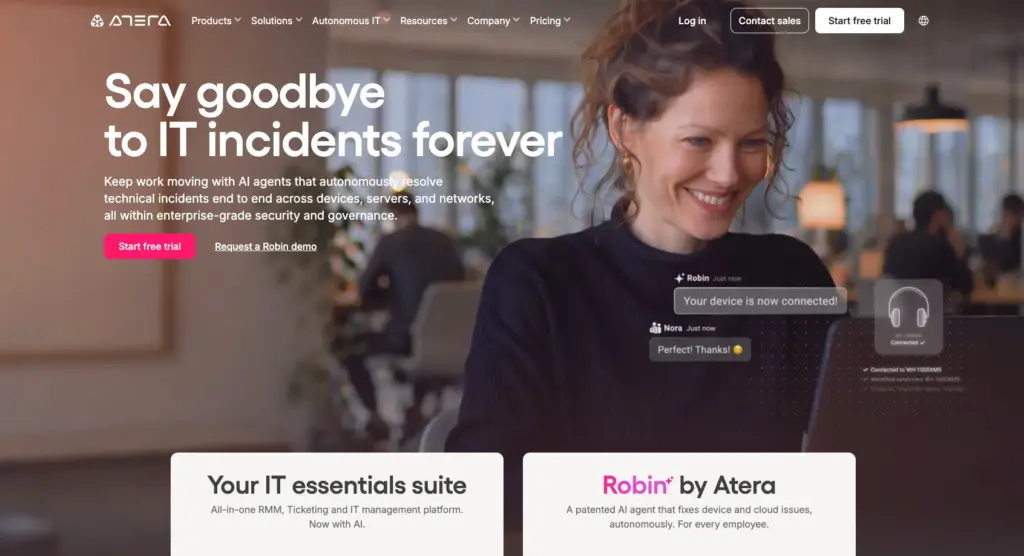
1. Atera’s driver updater capabilities: Atera’s patch management tool allows users to keep their drivers up-to-date by automating the detection, approval, and deployment process. With it, you can set up automated patch schedules so updates are deployed at times when there is the least disruption. Atera also offers detailed patch status reports, making it easy for you to stay compliant and secure.
2. Other key features: Atera is a broader IT management platform for monitoring and securing IT environments. In addition to patch management, Atera’s key features include RMM, PSA, remote access, helpdesk and ticketing, and reporting and analytics. MSPs can also manage client contracts and billing within Atera.
3. AI advancements: In addition to its robust capabilities, Atera’s platform is powered by two AI agents, Robin by Atera and AI Copilot. While Robin takes care of end-user support by autonomously resolving up to 92% of technical incidents, Copilot assists technicians in manual and repetitive tasks.
Features and capabilities
Before technicians even need to patch software, Robin runs update scans on its own, then installs/updates approved software.
When an employee reports a device or app issue, Robin can also repair or reinstall the affected application directly. These are just a few tasks Robin solves; see all use cases here.
To resolve issues autonomously, Robin follows a four-step resolution process:
- Diagnose: Robin receives the request through Teams, Slack, email, or the Atera Customer Portal and asks follow-up questions to find the root cause.
- Remediate: Robin takes the approved action directly on the device, network, or in the cloud, such as installing approved updates or resetting a network adapter.
- Verify: Robin confirms the issue is actually resolved before closing anything.
- Close: Robin updates the ticket with the outcome and logs every action for governance and compliance.
If an issue is too complex for Robin, it can automatically escalate it to a human technician, with full context. This is where AI Copilot comes in handy.
With AI Copilot’s insights on demand feature, you can get insights into your patch status by asking simple questions, such as “How many devices are missing critical driver updates?” or “Which devices have failed recent driver installations?”
In addition, the AI filters help manage large networks of devices. Using natural language queries, such as “List all devices with outdated drivers” or “Show devices that failed the last driver update,” enterprises can quickly identify and address issues.
User interface and usability
Atera was designed from the ground up with user-friendliness and ease of use in mind. For reference, here is what Atera’s modern admin dashboard looks like:
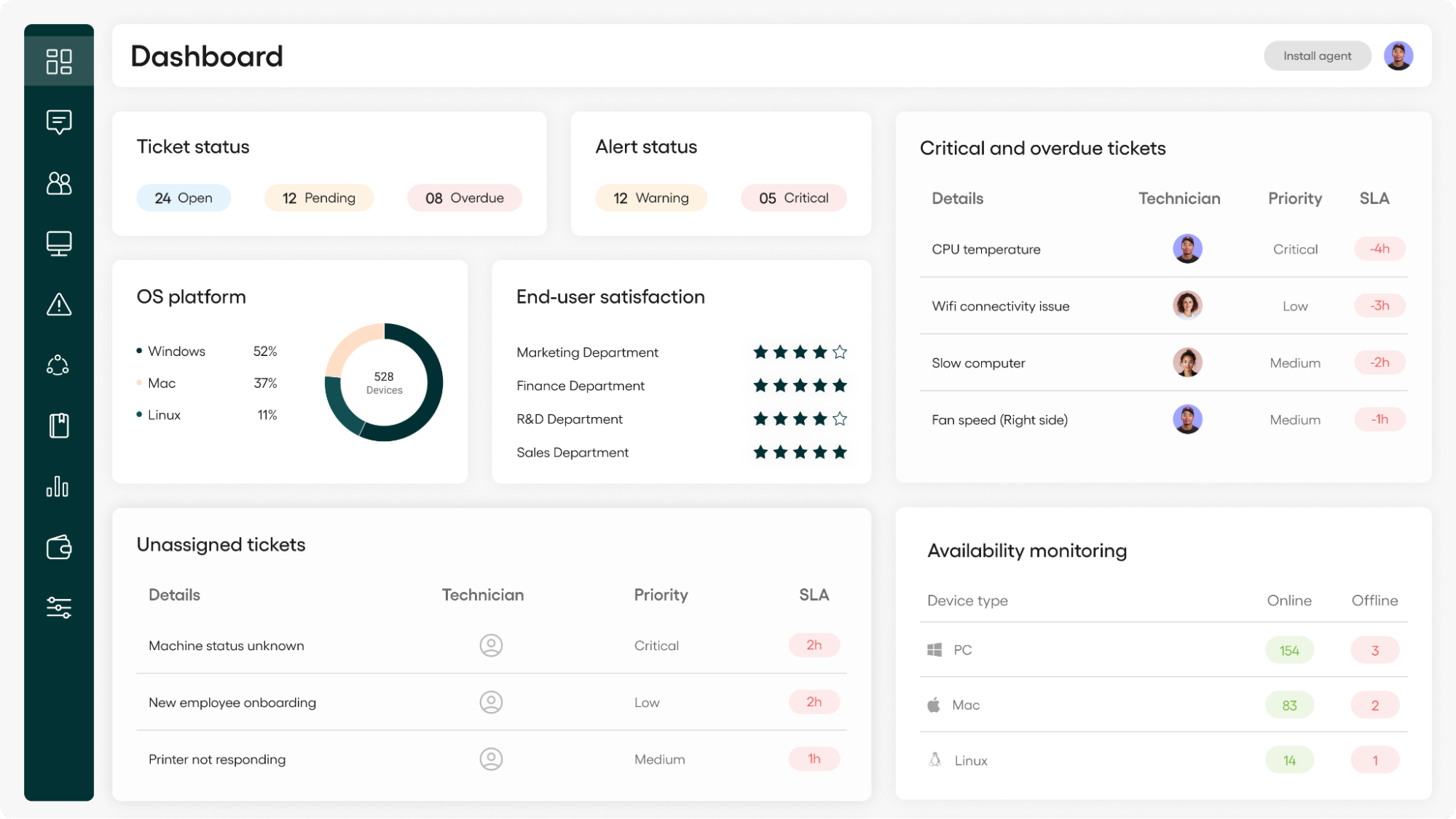
Most IT management tasks, such as updating hardware drivers, can be performed from the left sidebar. The different capabilities, including patch management, remote access, and IT ticketing, are separated into different interfaces. The platform’s intuitive interface makes navigating between capabilities an effortless endeavor.
If you face any issues with the platform, you can access 24/7 live chat and email support. Atera also has an active IT community where IT professionals can troubleshoot problems and discuss IT best practices.
Pricing and value for money
While enterprise customers can request a custom quote, the standard pricing plans for IT departments range between $149 and $219 per month. MSP pricing plans range from $129 to $209 per month.
Most users consider Atera’s pay-per-technician pricing system an advantage because it allows them to update drivers for an unlimited number of endpoints. Most IT management solutions use pay-per-endpoint pricing, which can add up quickly.
Atera pricing:
Atera’s pricing plans for IT departments:
- Professional: $149 per month, per technician
- Expert: $189 per month, per technician
- Master: $219 per month, per technician
- Enterprise: Custom quotation. Contact sales for pricing.
Atera’s pricing plans for MSPs:
- Pro: $129 per month, per technician
- Growth: $159 per month, per technician
- Power: $209 per month, per technician
- Superpower (Enterprise): Custom quotation. Contact sales for pricing.
Get started with Atera on a 30-day free trial, no credit card required.
4. Customer reviews and ratings
Atera G2 rating: 4.6 out of 5.0 stars (1,200+ reviews)
What Atera users are saying on G2:
- “One unexpected benefit is the AI feature, especially Robin. It can reduce technicians’ workload by assisting with responses, ticket handling, and general troubleshooting,” Emil C. says.
- “The most helpful of using Atera is that you have both RMM and PSA in one platform and also the AI capabilities with Copilot and Robin,” Alan S. says.
Atera Capterra rating: 4.6 out of 5.0 stars (400+ reviews)
What Atera users are saying on Capterra:
- “Atera gives me the opportunity to maintain low overhead costs; I did find the automation function worked as expected and didn’t crash the entire dashboard,” Alison K. says.
- “Atera has been a reliable tool for handling day-to-day IT operations. It reduces repetitive work and gives good visibility into system health,” Dymasius S. says.
2. Microsoft Intune – Suitable driver updater for Windows 11 environments
Microsoft Intune is a Windows driver update software. Its Windows Driver Update Management feature enables users to review, approve, and pause driver updates for Windows 10 and Windows 11 devices.
With Intune, IT staff can configure policies for controlling updates, including driver updates. Microsoft Intune offers other important features for endpoint management, such as built-in endpoint security, mobile application management, analytics, and reporting. It can be used alongside other Microsoft products, like SCCM.
G2 Rating: 4.5 out of 5.0 stars (270+ reviews)
Capterra Rating: 4.5 out of 5.0 stars (40+ reviews)
Microsoft Intune Pricing:
- Microsoft 365 E3: $39/month per user (includes Intune)
- Microsoft 365 E5: $60/month per user (includes Intune)
- Microsoft 365 E7: $99/month per user (includes Intune)
3. SolarWinds Patch Manager – Designed for automated Windows patching and driver updates
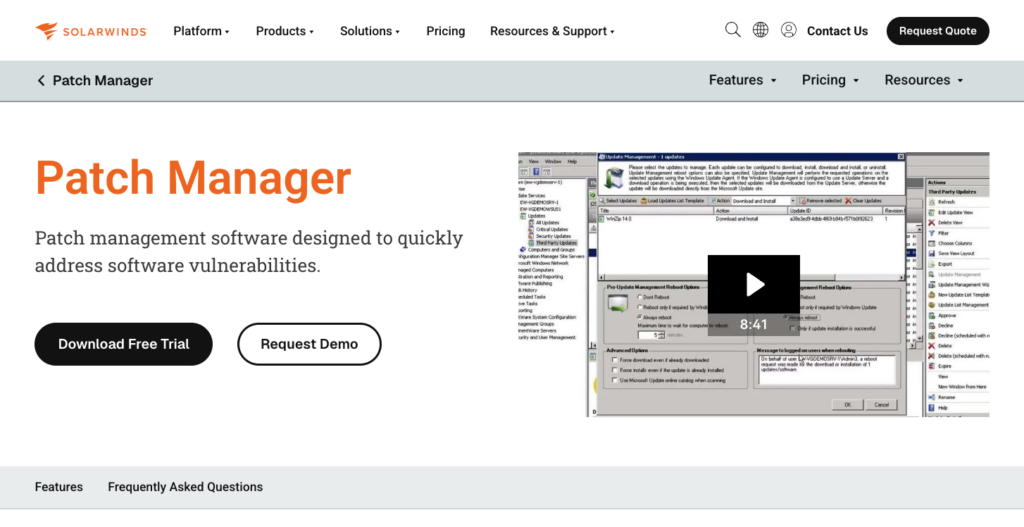
SolarWinds Patch Manager is a tool for automating driver updates and patching for Windows devices. Unlike Microsoft Intune (which is cloud-based), SolarWinds Patch Manager is an entirely on-premises solution.
You can set up advanced patch schedules and push updates to your devices weekly or more frequently if your IT policies require it. Aside from patch scheduling, SolarWinds’ inventory management capabilities provide information about device drivers, files, directories, and more.
G2 Rating: 4.5 out of 5.0 stars (190+ reviews)
Capterra Rating: 4.3 out of 5.0 stars (15+ reviews)
SolarWinds Patch Manager Pricing:
- Custom pricing: Pricing starts at €587. To find out the exact pricing, contact the SolarWinds sales team.
4. DriverMax – Basic no-cost driver updater for single Windows PCs
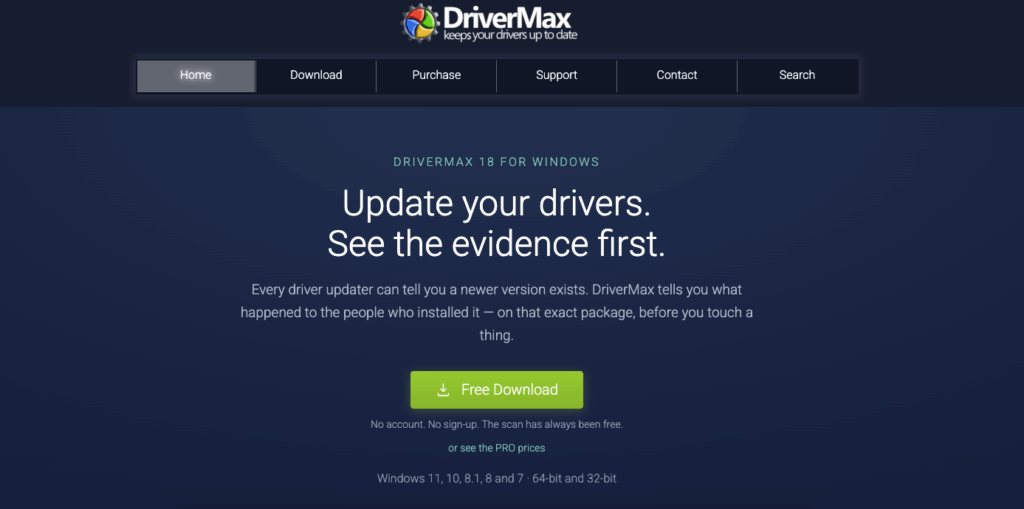
If you’re looking for a no-cost driver updater, DriverMax is your ideal choice. It is a top driver update software built to manage and update drivers on Windows PC while ensuring that all hardware components are working properly.
It helps users find driver updates for 32-bit and 64-bit versions of Windows 11, Windows 10, Windows 8.1, Windows 8, Windows 7, Windows Vista, and Windows XP. The latest DriverMax version also checks for updates to installed software packages, like OpenAL, DirectX, and Oracle Java.
IT teams needing to update dozens of drivers simultaneously are required to find a more comprehensive solution.
G2 Rating: N/A
Capterra Rating: N/A
DriverMax Pricing:
- Free plan: Free to use for up to two driver downloads per day
- Business plan: $270 for a one year business license
5. ManageEngine Patch Manager Plus – Effective for cross-platform patch and driver updates
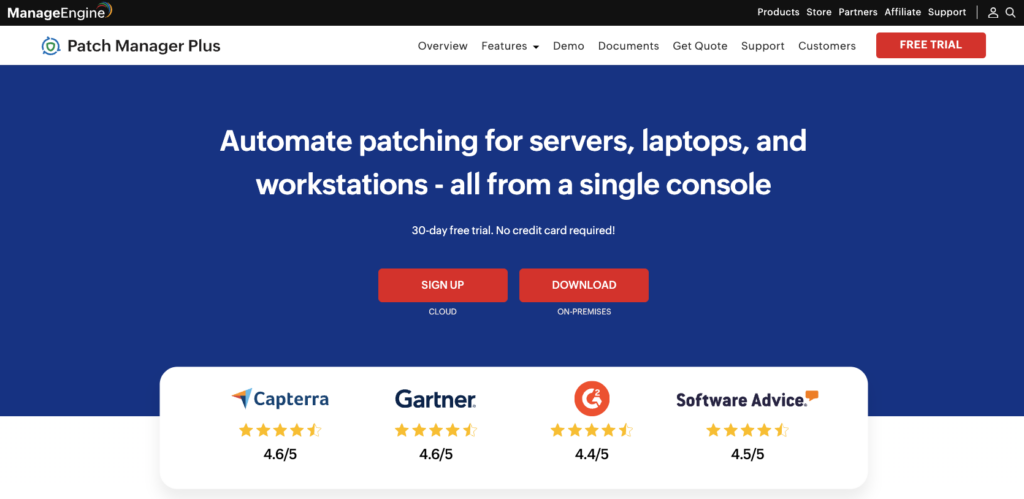
Patch Manager Plus is one of ManageEngine’s products and a great option for cross-platform patching and driver updates. It offers driver updates, patching capabilities for over 850 third-party applications, and antivirus definitions. It automates the entire driver updating process, from scanning and deploying them to generating patch status reports.
Patch Manager Plus’ functionality can be integrated with other ManageEngine products, such as Endpoint Central, for more comprehensive endpoint management capabilities.
G2 Rating: 4.5 out of 5.0 stars (190+ reviews)
Capterra Rating: 4.6 out of 5.0 stars (410+ reviews)
ManageEngine Patch Manager Plus Pricing:
- Free plan: Only suitable for small-scale patch management of up to 25 computers
- Professional: Starting from $245/year per technician
- Enterprise: Starting from $345/year per technician
6. Ivanti Endpoint Manager – Standard integrated endpoint management with driver updates
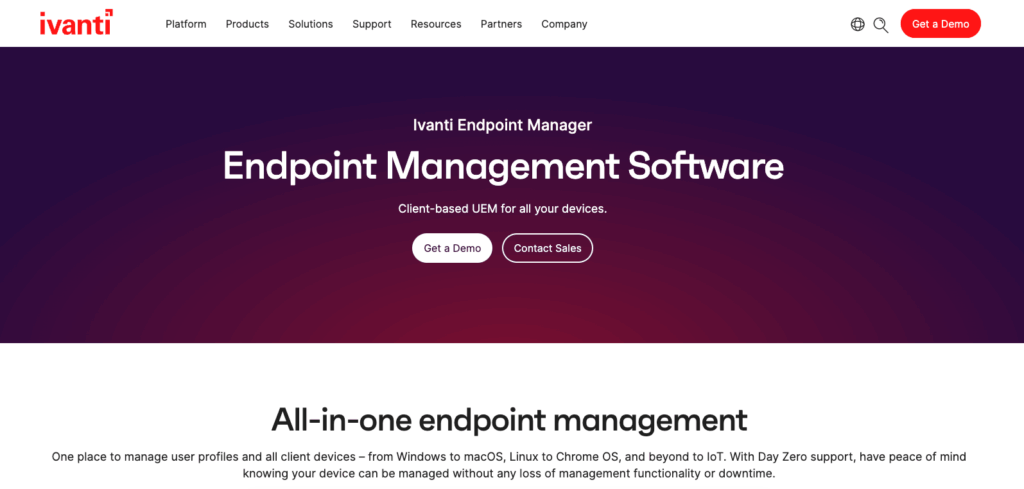
Ivanti Endpoint Manager is an advanced endpoint management solution with built-in driver management. Like other comprehensive IT management solutions, Ivanti Endpoint Manager does more than update drivers.
Beyond driver updating, it includes endpoint security, mobile device management, reporting, and analytics, as well as driver updater tools for Windows PCs. With Ivanti, users can create an automation profile to update drivers and deploy patches automatically.
Ivanti has also moved towards autonomous endpoint management, now using AI to prevent endpoint issues.
G2 Rating: 4.3 out of 5.0 stars (400+ reviews)
Capterra Rating: 3.0 out of 5.0 stars (1 review)
Ivanti Endpoint Manager Pricing:
- To find out the exact pricing, fill out a contact form from Ivanti’s website.
7. Datto RMM – Ideal remote monitoring tool with driver update capabilities

Datto RMM is known as a full-featured RMM software but offers capabilities for patch management, including driver updates. With it, you can set up patch management policies and pre-approve driver updates to be deployed. You can also set up site-level or global policies that can target multiple devices, meaning you can batch-update drivers.
This tool’s other key capabilities are its RMM, network topology maps, remote access, third-party integrations, and ransomware detection.
In 2026, Datto RMM updated its patch audits to match Microsoft’s native Windows Update logic. This improves how it identifies driver updates and optional updates.
G2 Rating: 4.5 out of 5 stars (540+ reviews)
Capterra Rating: 4.1 out of 5 stars (25+ reviews)
Datto Pricing:
- Datto RMM’s pricing is pay-per-device, and it’s not publicly listed. However, Reddit users estimate the pricing is $2.50 per endpoint and $100 per user for Autotask PSA.
One platform for updating drivers and IT management
In addition to being one of the best options for updating drivers, Atera offers numerous other capabilities. Atera includes patch management, RMM, PSA, remote access, reporting, and AI agents. Atera’s various third-party integrations further extend the functionality.
In addition, Atera’s platform is powered by Agentic AI. Before technicians even need to troubleshoot devices, Robin by Atera monitors your IT environment for potential issues. It resolves up to 92% of Tier-1 and complex Tier-2 incidents autonomously by reaching directly into the device, server, or cloud.
By offering the first agentic AI tool in the IT management industry, Atera helps enterprises to move towards autonomous endpoint management.
Want to learn more? Get in touch with our team to discuss your specific requirements and see how our team can assist.
What is driver updater software?
The best driver updater software scans computers for outdated, missing, or corrupt hardware drivers and then updates them to the latest versions.
Key features of driver update software include:
- Automated scanning
- Automatic update deployment
- Backup and restore
- Various security measures
Driver updater software’s functions vary widely. Some are offered as part of a more comprehensive patch management software, while others act as standalone solutions.
Types of driver updater software
Because the best driver updater software differs significantly, it’s essential to educate yourself on the options available and the differences between them. Let’s examine each one in detail.
1. Standalone driver updaters
Standalone driver updaters are dedicated applications that manage and update the drivers on your computer’s hardware. These tools focus solely on identifying outdated, missing, or corrupt drivers and then downloading and installing the latest versions.
Standalone driver updaters work best for users conducting small-scale driver updates for a single PC. IT professionals with extensive IT infrastructure are likely to find this option insufficient for their needs.
2. OEM-specific driver updaters
OEM-specific driver updaters are designed by the original equipment manufacturer (OEM) for use with their hardware only. For example, NVIDIA GeForce Experience is tailored for NVIDIA graphics cards.
These updaters make sure that the drivers for a particular brand’s devices are always up-to-date and optimized for performance and compatibility.
3. Patch management software
Patch management software automatically updates software applications and operating systems. These tools consistently deploy the latest hardware driver updates.
IT professionals and MSPs who regularly deploy patches that involve advanced capabilities will benefit the most from patch management tools. For folks who only need to update a single computer, patch management software is most likely an excessive investment.
Autonomous patch management tools are also now available, helping to schedule patches based on device behavior and self-correct failed deployments.
4. Unified IT management software
Unified IT management software allows organizations to manage their entire IT infrastructure through a single, unified platform. Users can access a variety of important IT management functions, including patch management and driver updater capabilities.
Unified solutions are a great option for IT departments and MSPs who need advanced automation, endpoint security, and centralized control over their systems.
Why you should invest in reputable driver updater software
Driver updater software offers several benefits to users. Below are the main ones to keep in mind as you explore solutions:
1. Maintain strong cybersecurity
Verizon’s 2026 Data Breach Investigations Report found that 31% of data breaches began with attackers exploiting a vulnerability. The best driver updater software automatically identifies and installs the latest driver updates, making sure all hardware components are protected and secure.
2. Enhanced system stability
Outdated or incompatible drivers can cause system crashes, freezes, and other stability issues. Driver updater software helps ensure systems are up-to-date, which in turn contributes to a smooth and reliable computing environment.
3. Improved regulatory compliance
Regulatory compliance requirements vary across industries. However, one requirement remains consistent throughout: all systems and software are required to be up-to-date and secure.
Relying on manual processes to manage driver updates increases the likelihood of errors and inconsistencies. This can result in malfunctions, penalties, and other undesirable outcomes.
The best driver updater software minimizes these risks by systematically scanning for outdated drivers and pushing out automatic updates.
4. Simplified IT management
Manually updating drivers requires substantial company resources. The process requires skilled technicians with a lot of time to dedicate to the task, which can add up financially.
The best driver updater software eliminates these costs by automatically scanning the system for outdated drivers, downloading the latest versions, and installing them. Some driver updater software, like Atera, even uses Agentic AI to install/update pre-approved software autonomously, meaning a technician doesn’t need to step in at all.
5. Extended hardware lifespan
Proactively maintaining drivers helps to extend the lifespan of devices. This longevity results in a better return on investment and delays the need for costly hardware replacements.
Why should you trust our reviews? ⚖️
We don’t just list any tools in our reviews; we do our own research and look at verified reviews on platforms like G2, Capterra, and Reddit to see what other IT professionals use and recommend. To be as unbiased as possible, we explain what each tool is best at, its key features, customer reviews, and pricing so you can make the best decision for your IT team.
Frequently Asked Questions
Related Articles

Activity History in windows: full user guide
Tracking Windows Activity History locally and in the cloud can improve continuity, productivity, and accountability across Windows devices, even in remote and hybrid environments. Though Windows Timeline was removed in recent versions of Windows 11, data can still be exported and tracked via the Microsoft Privacy Dashboard and other methods.
Read now
What is enterprise IT management (EITM)? A guide for IT leaders
IT inefficiencies lead to data silos, poor visibility, and direct operational losses, potentially leading to regulatory penalties and employee turnover. Enterprise IT management is a strategic approach that integrates key aspects of other IT disciplines like IT governance and ITSM. It can improve operational efficiency, risk mitigation, and cost optimization for various industries.
Read now
Choosing The Best Rugged Laptop in 2026: A Buyer’s Guide
In this guide, our team at Atera has reviewed the best rugged laptops for 2026 and listed key considerations when selecting one.
Read now
Best Wifi 6E routers: Should your IT department upgrade?
If you’re weighing on buying wifi 6E routers, our guide can help. We’ve compiled a list of the best wifi 6E routers, along with useful tips.
Read nowEndless IT possibilities
Boost your productivity with Atera’s intuitive, centralized all-in-one platform